
.png? "Theratio")

-
517,
Suncity Success Tower,
sec 65, Gurgaon,,
Haryana 122018. - info@thesixthelement.in
- +91 9810069803
Modern Wall Colour Ideas for Beautiful Home Interiors
By The Mind of An Architect | June 10, 2026 | Interior Design
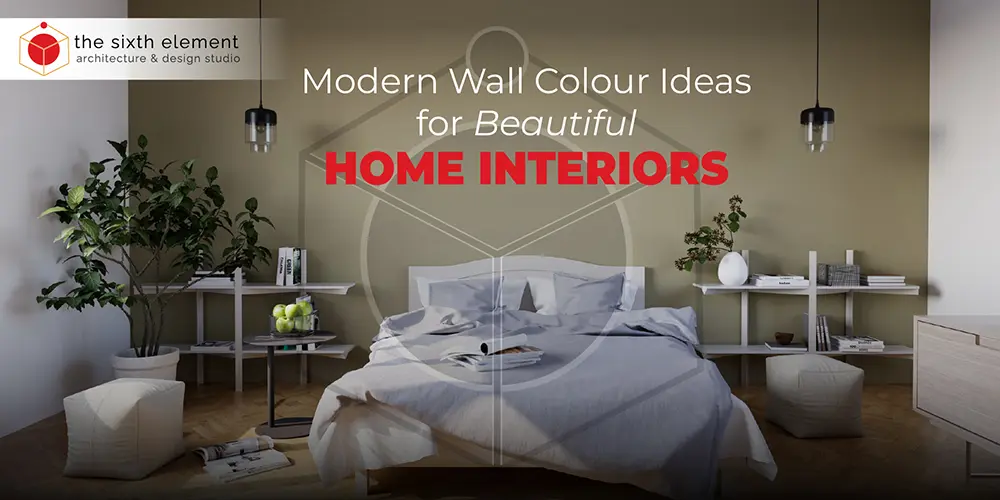
When you think about Modern Wall Colour Ideas for Beautiful Home Interiors, it’s really about how a space feels when you live in it every day. Colour is not just decoration on walls. It quietly decides whether a room feels open or closed, warm or cold, calm or energetic. Most people notice furniture first, but in reality, walls set the mood long before anything else enters the room.
This is where the idea of the sixth element of design fits in. It’s colour—simple on the surface, but powerful in shaping how a home behaves.
Why Wall Colour Changes the Entire Room
Walls cover the biggest area in any space, so they naturally influence everything around them.
- Light colours make a room feel more open and less heavy
- Dark colours bring depth and a stronger presence
- Warm tones make a space feel more lived-in and welcoming
- Cool tones give a cleaner and more controlled feel
Even a small shift in room colour can completely change how you experience the same space.
House Colour Trends People Are Actually Using in 2025
Most homes today are moving away from loud combinations. People want colours that stay comfortable for years, not just a few months.
Some commonly used house colour combinations include:
- Beige and white for soft and open living areas
- Olive green and cream for a grounded, natural feel
- Navy blue with off-white for a structured modern look
- Terracotta with sand tones for warm, earthy homes
These combinations work because they don’t feel forced. They settle into the space naturally and match most types of furniture.
How Colour Choices Affect Everyday Mood at Home
A home colour combination doesn’t just change appearance. It changes how you feel while spending time in that room.
- Soft shades help the mind relax
- High contrast adds alertness and energy
- Neutral tones make it easier to switch décor over time
For example, a hall wall colour combination like beige and white feels open and welcoming. On the other hand, grey and black gives a more structured and serious tone.
Same space, different feeling—just because of colour.
Room Colour Combinations That Actually Work
Choosing a room colour combination is not about picking random shades. It’s about how everything sits together.
Some practical combinations people use:
- Grey and white for a clean modern setup
- Peach and cream for soft family rooms
- Teal and beige for balanced interiors
- Charcoal and mustard for bold feature walls
These room colour design paint ideas work because they don’t fight with furniture. They sit quietly in the background and let the space breathe.
How to Decide the Right Wall Colour Without Overthinking
Most people get stuck here, but the process is simpler than it looks.
- Look at how much natural light the room gets
- Check what colour your furniture already is
- Think about how you want the room to feel
- Test a small patch before final painting
Rooms with strong sunlight can handle deeper shades. Darker rooms usually need lighter tones to stay balanced.
Wall Colour Ideas for Small Rooms
Small rooms need careful handling. The goal is not to add more colour, but to create space visually.
Good options include:
- White with soft grey for an open effect
- Light blue with beige for a fresh feel
- Soft pastels with off-white for a gentle look
These choices help a room colour combination feel lighter without making the room feel empty.
Colour Combinations That Stay Popular in Modern Homes
Some pairings keep showing up again and again because they simply work:
- Navy blue and white — sharp and classic
- Mint green and beige — calm and natural
- Peach and white — soft and easy on the eyes
- Charcoal and mustard — strong but balanced
- Teal and cream — slightly rich but not loud
These combinations fit both living rooms and bedrooms depending on how much light the space gets.
Matching Wall Colour with Furniture Without Mistakes
A good room colour design paint plan always connects walls with what is inside the room.
- Wooden furniture works well with beige, cream, and soft greens
- Metal furniture fits grey, black, and white tones
- Fabric-heavy interiors go well with pastel shades
When wall colour and furniture feel disconnected, the room looks unfinished. When they match, everything feels naturally in place.
Testing Wall Colour Before You Commit
This step saves more trouble than people expect.
- Put samples on more than one wall
- Look at them in morning and evening light
- Compare them with furniture and flooring
- Give it at least a day before deciding
This helps you understand how a home paint colour combination behaves in real life, not just on a chart.
Keeping Wall Colour Fresh Over Time
Walls don’t need constant change, but they do need simple care.
- Wipe gently instead of harsh scrubbing
- Avoid strong cleaning chemicals
- Touch up marks in high-use areas
- Keep sunlight exposure in check where possible
With basic care, your room colour stays consistent and doesn’t lose its feel too quickly.
FAQs
1. Which wall colour works best for modern homes?
Neutral shades like white, beige, and soft grey fit most spaces easily.
2. What colours make a room feel bigger?
Light tones such as white, pastel blue, and soft beige create that effect.
3. What is a safe room colour combination?
White and grey is the most balanced and widely used option.
4. Can dark colours be used in living rooms?
Yes, but it works better when used on a single feature wall.
5. How often should walls be repainted?
Usually every 3–5 years depending on usage and lighting.