
.png? "Theratio")

-
517,
Suncity Success Tower,
sec 65, Gurgaon,,
Haryana 122018. - info@thesixthelement.in
- +91 9810069803
How Architecture Firms Are Using Generative Design Today?
By The Mind of An Architect | Aug 10, 2021 | Architecture
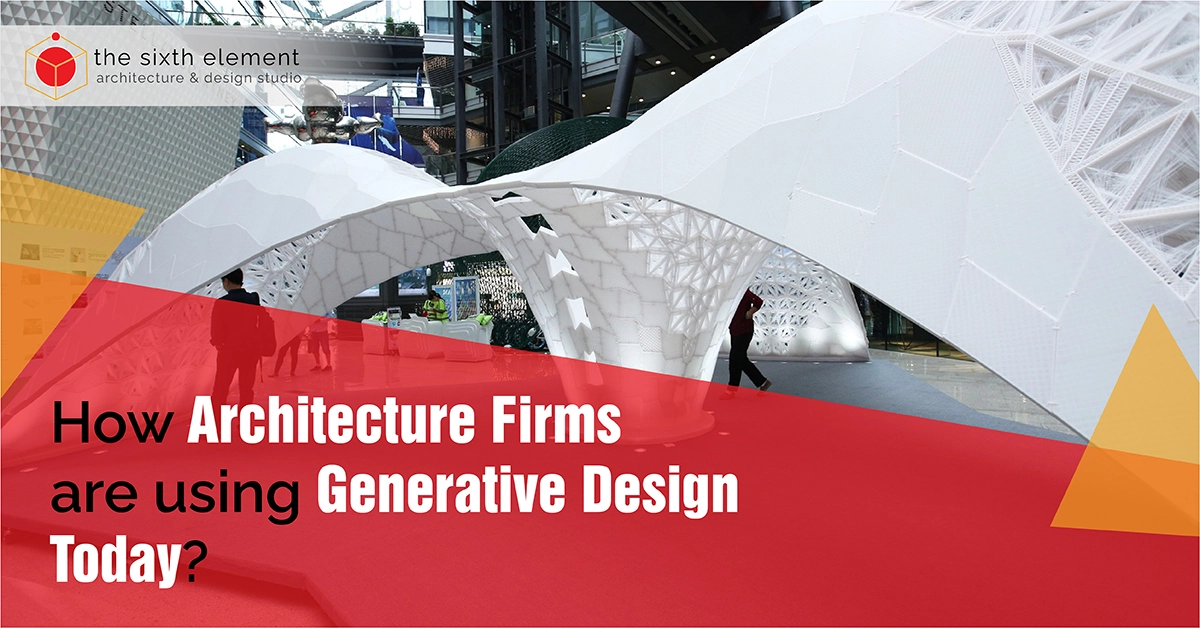
There has been immense progress in the Architecture Firms lately, with architects exploring new design approaches to push creativity further — and one of the most fascinating developments is generative design.
What effect would Generative Design have on Architecture?
Architecture is about creating spaces where people live, work, and feel comfortable. A well-designed building doesn’t just serve a functional purpose — it shapes emotions, experiences, and lifestyle. Hiring a professional architect ensures that the home or space reflects personal preferences while maintaining structural balance and practicality. Architects think beyond drawings; they plan spaces that work beautifully today and continue to add value in the future.
What is the effect of Generative Design on Architecture?
Architectural design shapes the present and sets the foundation for the future. With rapid technological growth, artificial intelligence is becoming central to solving design challenges. One powerful branch of AI — generative design — is reshaping how architects think, develop, and refine ideas.
Intricate Details About Generative Design
Generative design expands the range of possibilities available to architectural planners. Instead of manually drawing concepts, architects define goals, constraints, materials, and challenges — and the software produces multiple solutions. It’s like telling a system what the design must achieve rather than drawing it yourself.
Consider the example of designing a chair. Instead of sketching, you inform the system about load capacity, materials, cost limits, and functionality. The software then generates optimized versions using cloud computing and advanced algorithms.
Unlike traditional methods that improve existing designs, generative design creates entirely new ones. A notable project in Toronto used this technology to plan a complete office floor layout — something extremely difficult to produce manually. Employees were studied for behavior and work patterns, and the software generated 10,000 design possibilities. The final output — created by both humans and machines — was something neither could achieve alone.
Statistics show rapid adoption: 46% of architecture firms are aware of generative design, and nearly 37% are already applying it. AI is transforming industries by boosting productivity by up to 40% and reducing costs by nearly 70%. In architecture, generative design is expected to become as essential as traditional tools.
Generative design reduces research and concept-development time, offers high versatility, and delivers ready-to-build design options. As this technology grows, programming knowledge will become increasingly important for architects. The future will depend on human-machine collaboration where both work together to solve complex design challenges.
Architects of the future will need to understand how to interact with intelligent systems and guide them with the right parameters. The goal is not to replace human creativity but to amplify it. When computers help solve problems through millions of possibilities, architects can focus on vision, relevance, and human connection.