
.png? "Theratio")

-
517,
Suncity Success Tower,
sec 65, Gurgaon,,
Haryana 122018. - info@thesixthelement.in
- +91 9810069803
What Is Epoxy Flooring? Types, Benefits & How to Choose
By The Mind of An Architect | Sep 19, 2026 | Interior Design
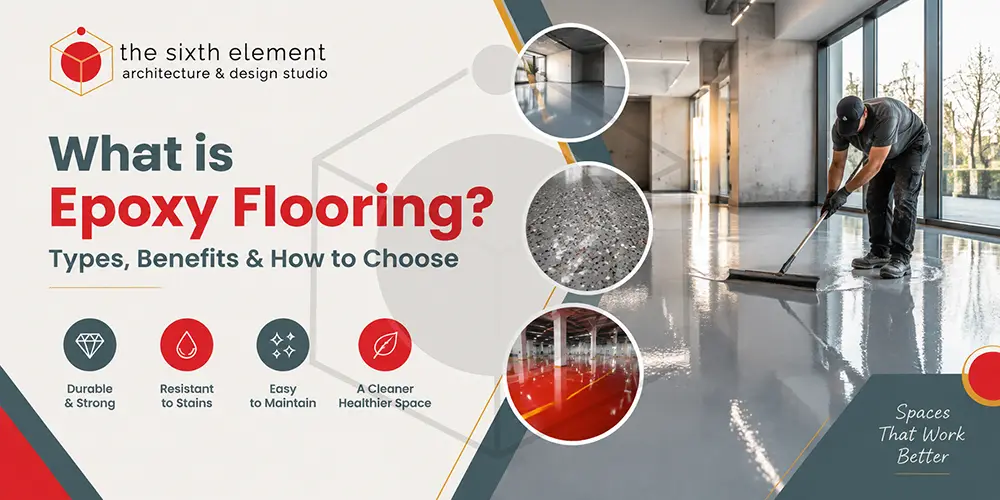
Flooring affects far more than the appearance of a room. It has to handle daily movement, furniture, moisture, cleaning, spills and regular wear. This is why epoxy flooring has become a practical choice for homes, offices, retail spaces, garages and commercial properties.
An epoxy floor is made by applying a resin-based coating to a properly prepared surface, usually concrete. When cured it forms a hard, smooth and durable film. Depending on the finish, an epoxy resin floor can look plain and functional or become an important part of the interior design.
What Is Epoxy Flooring? Types, Benefits & How to Choose the Right Floor Finish
Epoxy flooring uses resin and a hardening agent that react together to create a tough surface coating. Unlike ordinary floor paint, properly installed epoxy bonds strongly with the base and produces a thicker finish.
People often compare epoxy paint for floor applications with complete resin flooring systems, but they are not always the same. A simple epoxy coating may provide surface protection, while a professional flooring system can include surface preparation, primer, several epoxy layers and a protective topcoat.
The right choice depends on foot traffic, moisture, expected load, appearance and maintenance needs. This is especially important during new Construction Gurgaon projects, where flooring can be planned along with lighting, walls, furniture and the overall interior scheme instead of being selected at the last stage.
Different Types of Epoxy Flooring
Epoxy is available in several forms, and each type works well in different conditions.
Self-Levelling Epoxy Floor
Self-levelling epoxy spreads across the prepared base to create a smooth and even surface. It works well in offices, showrooms, kitchens and residential areas where a clean finish matters.
Epoxy Mortar Flooring
This is a thicker and heavier flooring system made for areas that face high loads or frequent movement. Workshops, industrial units and commercial spaces commonly use it.
Decorative Epoxy Flooring
Decorative epoxy allows more freedom with patterns, flakes, textures and effects. A customised epoxy flooring design can complement modern homes, cafés, stores and reception areas.
Metallic Epoxy Flooring
Metallic pigments create flowing patterns and colour variation across the floor. Each installation looks slightly different, making it suitable for spaces where flooring is intended to become a visual feature.
Epoxy Terrazzo Flooring
This option combines epoxy resin with decorative aggregates to produce a polished terrazzo-like finish. It suits larger interiors where durability and appearance are equally important.
Main Benefits of Epoxy Flooring
One major reason people choose epoxy is its combination of strength and appearance.
- Durable surface: A correctly installed epoxy resin floor can tolerate regular foot traffic and everyday wear.
- Easy cleaning: Its smooth surface has fewer joints where dust and dirt can settle.
- Water and stain resistance: Epoxy handles many everyday spills better than untreated concrete.
- Wide design choice: Different epoxy flooring colours, textures and decorative effects can suit modern or understated interiors.
- Works across different spaces: It can be used in homes, offices, garages, shops and selected industrial areas.
- Clean appearance: The continuous surface creates fewer visible breaks than conventional epoxy flooring tiles or many tiled floors.
The exact performance still depends on the condition of the base, preparation method, product quality and workmanship. UltraTech also notes that preparation and suitable material selection are important factors when working with epoxy floor systems.
Epoxy Flooring Design and Colour Options
Epoxy does not have to look industrial. Current epoxy flooring design options range from plain neutral floors to metallic patterns, marble-like effects and decorative flakes.
Popular epoxy flooring colours include grey, white, beige, black and earthy shades. Brighter tones can also work in retail or creative environments.
Colour should be chosen according to the room size, lighting, furniture and wall finish. An Interior Designer Delhi may, for example, use a subtle epoxy surface to support a minimalist interior rather than making the flooring compete with furniture and architectural details.
How to Choose the Right Epoxy Floor
Start with the way the room will actually be used. A residential study does not need the same flooring specification as a workshop or commercial kitchen.
Check the concrete condition before deciding on the coating. Cracks, moisture or an uneven base may need repair first. Next, decide whether your priority is appearance, heavy-duty performance, stain resistance or easy maintenance.
Think about finish as well. Shiny surfaces reflect more light, but flat or rough finishes may be better in circumstances where glare or slipping is an issue.
For a new home or commercial project, discuss flooring early with your Architect Delhi, contractor or interior designer. Doing this helps coordinate floor level, skirting, doors, lighting and furniture with the selected material.
Epoxy Flooring vs Epoxy Flooring Tiles
Epoxy flooring tiles and continuous epoxy coatings create very different results. Tiles have joints and individual units, while poured epoxy creates a more continuous finish.
Tiles may be easier to replace individually, whereas resin flooring works well when you want fewer visible joints and a cleaner overall surface. The better option depends on design, budget, maintenance expectations and site conditions.
Is Epoxy Flooring Right for Your Space?
Epoxy works particularly well when you want a hard-wearing floor with plenty of finish options. Still, choosing only by appearance can lead to problems. Surface condition, moisture, room usage and installation quality matter just as much.
When flooring is planned as part of the complete architectural and interior scheme, it tends to look more considered. The Sixth Element combines architecture, interiors and project execution
across residential and commercial spaces, making material coordination an important part of the design process.
FAQs
What is epoxy flooring?
Epoxy flooring is a resin-based floor system that cures into a hard, smooth and protective surface.
Is epoxy flooring suitable for homes?
Yes. It can work well in garages, kitchens, living areas and other spaces when the correct system is selected.
How long does an epoxy floor last?
Its lifespan depends on traffic, preparation, material quality, installation and maintenance.
Which epoxy flooring colours are popular?
Grey, white, beige, black and neutral earthy tones are commonly used, although many customised colours are available.
Is epoxy flooring better than tiles?
Neither is always better. Epoxy offers a continuous finish, while tiles may suit projects where individual replacement or a traditional tiled appearance is preferred.