
.png? "Theratio")

-
517,
Suncity Success Tower,
sec 65, Gurgaon,,
Haryana 122018. - info@thesixthelement.in
- +91 9810069803
10 Types of Building Materials Used in Construction
By The Mind of An Architect | Mar 05, 2026 | Interior Design
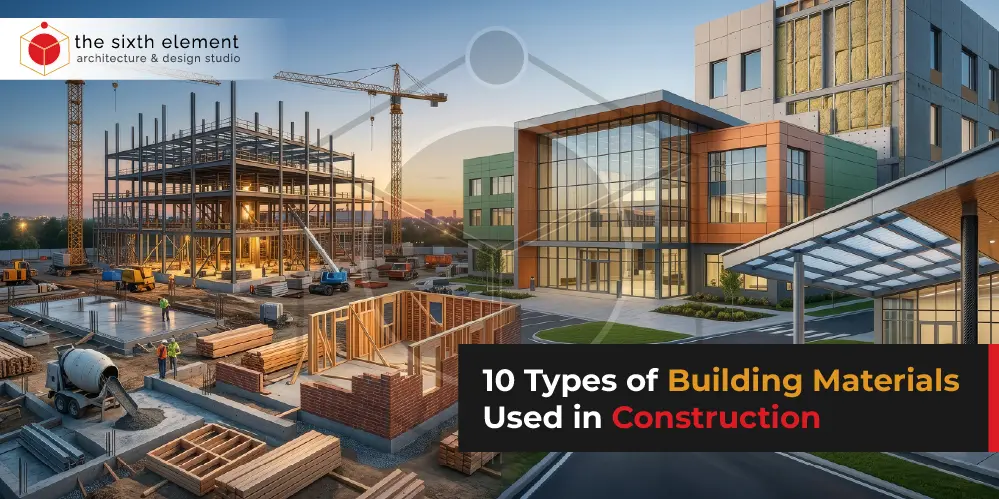
When any structure is built—whether it is a home, commercial building, hospital, or clinic—the choice of building materials directly affects its strength, durability, and safety. Every part of a structure depends on the materials used during construction, from the foundation to the roof.
Builders and engineers carefully choose materials based on their strength, cost, availability, and suitability for the local climate. Some materials are responsible for structural stability, while others improve insulation, finishing, and protection.
Understanding the most commonly used construction materials helps homeowners and developers make better decisions while planning a project.
Below are 10 important building materials used in construction and why they are essential for modern buildings.
List of 10 Types of Building Materials Used in Construction
1. Cement
Cement is one of the most important materials used in construction. It works as a binding agent that holds other materials together. When mixed with sand, aggregates, and water, cement forms mortar or concrete.
It is widely used in foundations, columns, slabs, plastering, and masonry work. Because of its strong bonding properties, cement provides stability and long-term durability to buildings.
Most residential and commercial construction projects rely heavily on cement for structural strength.
2. Steel
Steel is known for its high strength and flexibility. It is commonly used in reinforced concrete structures to improve load-bearing capacity.
Steel reinforcement bars, also known as rebars, are placed inside concrete to strengthen columns, beams, and slabs. Large structures such as bridges, high-rise buildings, and commercial complexes depend heavily on steel for structural support.
The combination of steel and concrete creates strong and reliable construction frameworks.
3. Bricks
Bricks are one of the oldest and most commonly used building materials. They are made from clay and hardened through a high-temperature firing process.
Bricks are widely used for walls, partitions, and boundary structures. They provide durability, fire resistance, and good insulation properties.
Because of their strength and affordability, brick masonry continues to be a popular construction method across many regions.
4. Sand
Sand plays an important role in construction. It is mixed with cement and water to prepare mortar and concrete.
The quality of sand affects the strength and workability of construction mixtures. Sand is commonly used in plastering, masonry work, flooring, and tile installation.
Different types of sand such as river sand and manufactured sand are used depending on construction requirements.
5. Aggregates
Aggregates include materials such as crushed stone, gravel, and coarse sand. These materials are mixed with cement and water to create concrete.
They help improve the strength, durability, and stability of construction structures. Aggregates also reduce shrinkage in concrete and increase load-bearing capacity.
Most structural concrete mixtures rely on aggregates to provide the required strength.
6. Concrete
Concrete is one of the most durable and widely used building materials in modern construction.
It is made by mixing cement, sand, aggregates, and water. Once hardened, concrete becomes extremely strong and capable of supporting heavy loads.
Concrete is commonly used in foundations, columns, beams, slabs, and structural frameworks. Reinforced concrete structures are widely used in residential buildings, commercial complexes, and infrastructure projects.
7. Wood
Wood has been used in construction for centuries. It is commonly used for doors, windows, furniture, roofing structures, and interior elements.
Wood is easy to work with and provides a natural aesthetic appeal. Modern construction also uses engineered wood products for improved strength and durability.
Although concrete and steel dominate structural construction today, wood remains an important material for interior and decorative applications.
8. Glass
Glass has become an essential material in modern architecture. It is widely used in windows, facades, partitions, and decorative elements.
Glass allows natural light to enter buildings, improving indoor lighting and reducing the need for artificial illumination. This helps improve energy efficiency and enhances the overall appearance of buildings.
Commercial buildings, offices, and hospitals often use glass extensively in their architectural design.
9. Natural Stone
Natural stone has been used in construction for thousands of years. Stones such as granite, marble, limestone, and sandstone are widely used in flooring, wall cladding, and decorative finishes.
Stone provides excellent durability and resistance to environmental conditions. Because of its strength and natural beauty, it is commonly used in both traditional and modern construction projects.
10. Tiles and Ceramic Materials
Tiles are widely used in flooring, walls, kitchens, bathrooms, and outdoor areas.
Different types of tiles such as ceramic tiles, porcelain tiles, and vitrified tiles are used in residential and commercial construction.
Tiles are durable, easy to maintain, and available in many designs, colors, and textures, making them a popular finishing material in modern buildings.
Why Choosing the Right Construction Materials Matters
The materials used in construction play a major role in the strength, safety, and lifespan of any building. High-quality materials improve durability and reduce long-term maintenance costs.
In specialized facilities such as hospitals and healthcare clinics, selecting the right materials becomes even more important. These buildings must meet strict hygiene standards while maintaining structural reliability.
Proper construction materials help create environments that are safe, functional, and long-lasting for residents, patients, and visitors.
FAQs
What are the 10 basic construction materials?
The 10 basic construction materials commonly used in building projects include cement, steel, bricks, sand, aggregates, concrete, wood, glass, stone, and tiles. These materials provide structural strength, durability, and finishing for residential and commercial buildings.
What are the 10 types of materials used in construction?
Common construction materials include cement, steel, concrete, bricks, sand, aggregates, wood, glass, stone, and ceramic materials. Each material serves a specific purpose such as structural support, wall construction, flooring, or finishing work.
What are the main types of building materials?
Building materials can be divided into natural materials like stone and wood, manufactured materials such as cement and steel, composite materials like concrete, and finishing materials including glass, tiles, and ceramics.
What are four common building materials?
Four commonly used construction materials include cement, steel, bricks, and concrete. These materials form the core structural components of most buildings and infrastructure projects.
Conclusion
Selecting the right building materials is the foundation of a strong and reliable structure. Whether constructing a house, commercial building, hospital, or clinic, high-quality materials ensure long-term durability and safety.
Modern construction combines traditional materials like brick and stone with advanced materials such as reinforced concrete and steel to create buildings that are strong, efficient, and long-lasting.
When construction materials are carefully chosen and properly used, they help create spaces that remain safe, stable, and comfortable for many years.